Blue Buffalo Homestyle Recipe Lamb & Turkey Variety Pack Senior Dry Dog Food
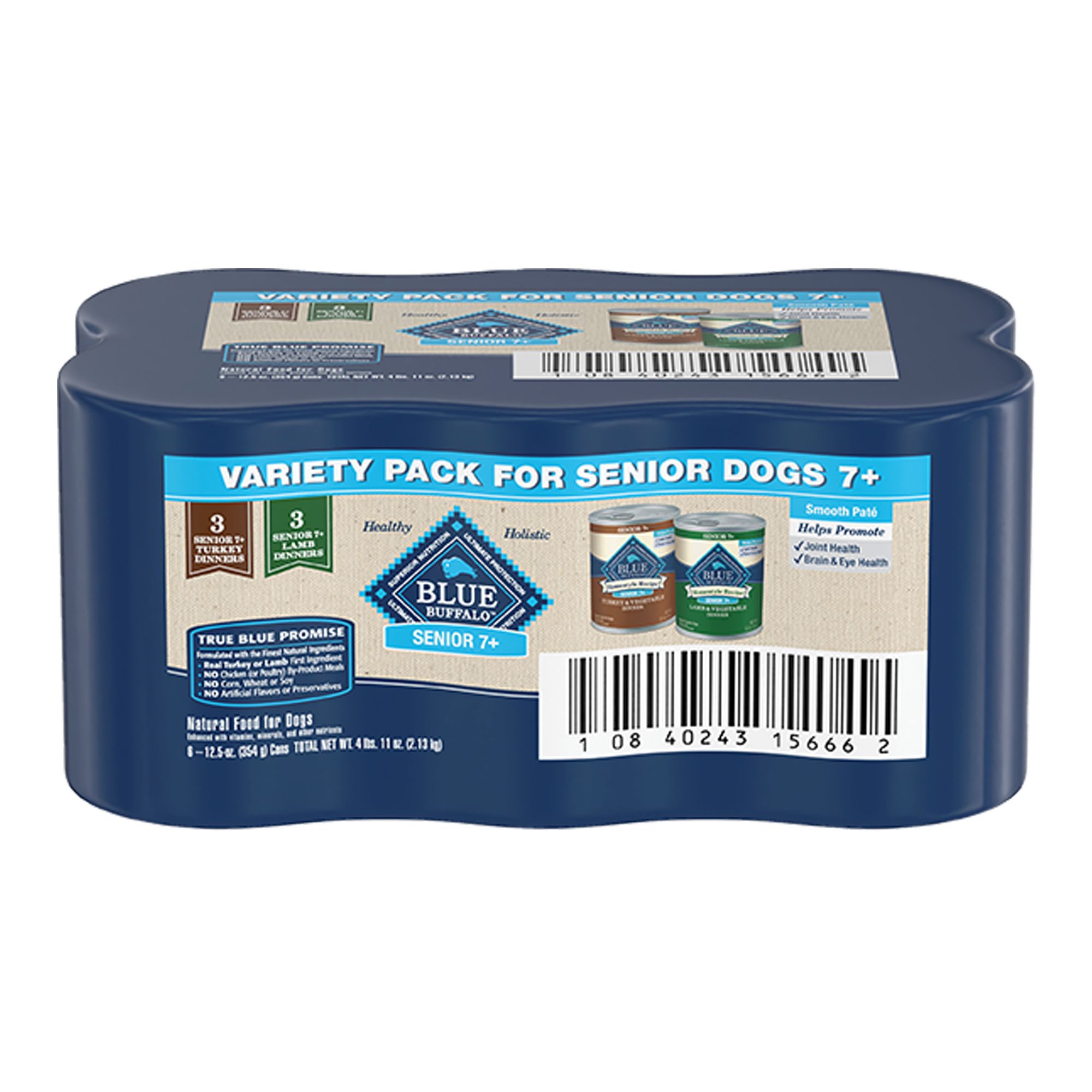
by Blue Buffalo
Overall Score: 92/100
Ingredients
- Turkey (protein)
- Chicken (source of Glucosamine and Chondroitin Sulfate) (protein)
- Turkey Broth (protein)
- Turkey Liver (protein)
- Carrots (other)
- Peas (carbohydrate)
- Sweet Potatoes (carbohydrate)
- Brown Rice (carbohydrate)
- Barley (carbohydrate)
- Fish Oil (source of DHA–Docosahexaenoic Acid) (protein)
- Oatmeal (carbohydrate)
- Flaxseed (source of Omega 3 and 6 Fatty Acids) (other)
- Guar Gum (additive)
- Potassium Chloride (mineral)
- Carrageenan (additive)
- Cassia Gum (other)
- Salt (mineral)
- Taurine (additive)
- Blueberries (other)
- Cranberries (other)
- Dried Chicory Root (fiber)
- Choline Chloride (vitamin)
- Vitamin E Supplement (vitamin)
- Zinc Amino Acid Chelate (mineral)
- Iron Amino Acid Chelate (mineral)
- L–Carnitine (other)
- Copper Amino Acid Chelate (mineral)
- Manganese Amino Acid Chelate (mineral)
- Sodium Selenite (mineral)
- Niacin Supplement (Vitamin B3) (other)
- Calcium Pantothenate (Vitamin B5) (other)
- Thiamine Mononitrate (Vitamin B1) (other)
- Riboflavin Supplement (Vitamin B2) (other)
- Vitamin A Supplement (vitamin)
- Vitamin B12 Supplement (vitamin)
- Pyridoxine Hydrochloride (Vitamin B6) (other)
- Biotin (Vitamin B7) (other)
- Potassium Iodide (other)
- Vitamin D3 Supplement (vitamin)
- Folic Acid (Vitamin B9) (other)
- preserved with Mixed Tocopherols.Senior 7+ Lamb: Lamb (protein)
- Chicken (source of Glucosamine and Chondroitin Sulfate) (protein)
- Chicken Broth (protein)
- Carrots (other)
- Beef Liver (protein)
- Peas (carbohydrate)
- Sweet Potatoes (carbohydrate)
- Flaxseed (source of Omega 3 and 6 Fatty Acids) (other)
- Brown Rice (carbohydrate)
- Barley (carbohydrate)
- Oatmeal (carbohydrate)
- Fish Oil (source of DHA–Docosahexaenoic Acid) (protein)
- Guar Gum (additive)
- Potassium Chloride (mineral)
- Carrageenan (additive)
- Sunflower Oil (fat)
- Cassia Gum (other)
- Taurine (additive)
- Blueberries (other)
- Cranberries (other)
- Dried Chicory Root (fiber)
- Salt (mineral)
- Choline Chloride (vitamin)
- Vitamin E Supplement (vitamin)
- Zinc Amino Acid Chelate (mineral)
- Iron Amino Acid Chelate (mineral)
- L–Carnitine (other)
- Copper Amino Acid Chelate (mineral)
- Manganese Amino Acid Chelate (mineral)
- Sodium Selenite (mineral)
- Niacin Supplement (Vitamin B3) (other)
- Calcium Pantothenate (Vitamin B5) (other)
- Thiamine Mononitrate (Vitamin B1) (other)
- Riboflavin Supplement (Vitamin B2) (other)
- Vitamin A Supplement (vitamin)
- Vitamin B12 Supplement (vitamin)
- Pyridoxine Hydrochloride (Vitamin B6) (other)
- Biotin (Vitamin B7) (other)
- Potassium Iodide (other)
- Vitamin D3 Supplement (vitamin)
- Folic Acid (Vitamin B9) (other)
- preserved with Mixed Tocopherols (other)
Ingredient concerns
- Peas (low concern): Peas and other legumes have been associated with the FDA investigation into a potential link between grain-free diets high in legumes and dilated cardiomyopathy (DCM) in dogs. While a definitive causal relationship has not been established, the FDA continues to investigate. Peas are frequently used in grain-free formulations as a primary carbohydrate and protein source.
- Carrageenan (high concern): Research has shown that both degraded carrageenan (poligeenan) and food-grade carrageenan can promote intestinal inflammation in animal models. Studies have linked carrageenan exposure to intestinal lesions, ulcerations, and colitis-like symptoms in laboratory animals. While the FDA considers food-grade carrageenan safe, concerns remain about degradation during processing and digestion. The Cornucopia Institute petitioned the USDA to remove carrageenan from organic food standards.
- Sodium Selenite (low concern): Sodium selenite is an inorganic form of selenium with a narrower safety margin than organic forms (such as selenium yeast). It has lower bioavailability and higher potential for toxicity at elevated levels compared to organic selenium sources. Some premium pet foods use selenium yeast instead as a safer alternative.
- Peas (low concern): Peas and other legumes have been associated with the FDA investigation into a potential link between grain-free diets high in legumes and dilated cardiomyopathy (DCM) in dogs. While a definitive causal relationship has not been established, the FDA continues to investigate. Peas are frequently used in grain-free formulations as a primary carbohydrate and protein source.
- Carrageenan (high concern): Research has shown that both degraded carrageenan (poligeenan) and food-grade carrageenan can promote intestinal inflammation in animal models. Studies have linked carrageenan exposure to intestinal lesions, ulcerations, and colitis-like symptoms in laboratory animals. While the FDA considers food-grade carrageenan safe, concerns remain about degradation during processing and digestion. The Cornucopia Institute petitioned the USDA to remove carrageenan from organic food standards.
- Sodium Selenite (low concern): Sodium selenite is an inorganic form of selenium with a narrower safety margin than organic forms (such as selenium yeast). It has lower bioavailability and higher potential for toxicity at elevated levels compared to organic selenium sources. Some premium pet foods use selenium yeast instead as a safer alternative.
Dry food, with grains, for the senior life stage.
Similar products
- Blue Buffalo® Delights Small Breed Adult Wet Dog Food - Filet Mignon in Gravy, 3.5 oz — 97/100
- Blue Buffalo® Delights Small Breed Adult Wet Dog Food - New York Strip in Gravy, 3.5 oz — 97/100
- Blue Buffalo® Delights Small Breed Adult Wet Dog Food - Prime Rib in Gravy, 3.5 oz — 97/100
- Blue Buffalo® Delights Small Breed Variety Pack Adult Wet Dog Food - New York Strip & Filet Mignon — 97/100
- Blue Homestyle Recipe Senior 7+ Beef & Vegetable Dinner — 96/100
As an Amazon Associate, KibbleWatcher earns from qualifying purchases at no cost to you. Our scoring is independent of any affiliate revenue.